
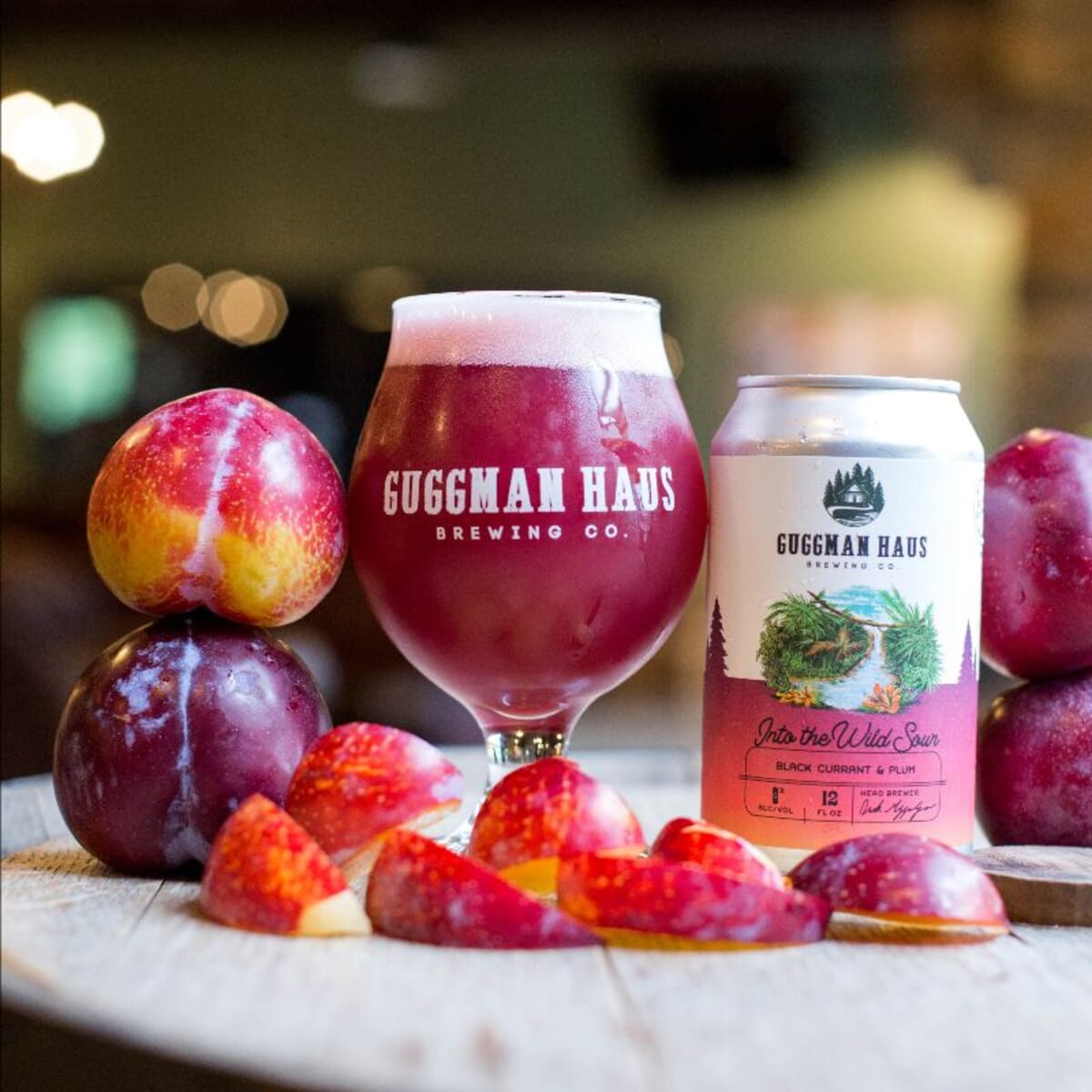
Black currant is an uncommon thing to find in an American beer, and the reason has very little to do with how it tastes.
For most of the twentieth century, growing it here was against the law. Currants and gooseberries, the Ribes genus, host white pine blister rust, a fungal disease that was moving through a timber industry the country had a great deal of money riding on. A federal ban on cultivation took effect in 1911. Washington lifted it in 1966 and left the question to individual states, some of which took decades longer to act. New York did not permit the crop again until 2003. Several generations of American drinkers grew up without the flavor as a result, while in Europe it never went anywhere, turning up in liqueur, syrup, jam and soft drinks throughout.
Guggman Haus has now built a beer around it. Into the Wild Sour: Black Currant Plum is the newest entry in the Indianapolis brewery's rotating fruited sour series, brewed with black currant and plum puree alongside vanilla beans. The brewery reports vanilla notes set against sweet berry and an earthy tannin character.
Tannin is the word worth catching there. It is not a quality beer normally has much of, belonging more properly to wine and tea and the skins and seeds of things. Black currant skins carry it and so do plums, which means the two fruits here are pulling in the same direction rather than simply stacking fruit on fruit.
The construction underneath is doing the opposite job. Guggman Haus soured this with a wild yeast strain, a different route from the bacterial kettle-souring most fruited sours take, then added milk sugars and oats. Milk sugar does not ferment out, so it stays in the finished beer as sweetness and weight. Oats contribute a soft, slightly viscous texture. Against acid and tannin, both are there to round off the corners.
It lands at 8 percent, which is a long way from where the reference style began. A traditional Berliner weisse is a light, briskly tart wheat beer of around 3 percent, served in its home city with a shot of syrup to soften it. American brewers have been stretching that reference for years now, and this is close to the far end of the stretch.
Into the Wild Sour: Black Currant Plum is new at Guggman Haus this week.
Source & Editorial
JollyPint independently prepares release articles using information published by breweries through newsletters, websites, and other official public communications. Brewery-supplied descriptions and tasting notes are reported as provided, while editorial context is added by JollyPint.