
The first beer a brewery ever makes does not usually stay on the menu. It gets outgrown, quietly shelved, and remembered fondly by about four people.
Adroit Theory has taken the opposite approach with Black as Your Soul. The Purcellville brewery has made the imperial stout dozens of times since it became the first beer it ever brewed, and the batch released this week is being framed as a return to the original rather than another step away from it. The brewery says this iteration is the closest to how the beer tasted around 2017 and 2018.
That is a claim only the brewer can really make, and the brewery makes it plainly. What it describes is piney, hoppy aromatics over rich malt, a lighter body than the number suggests, and assertive bitterness through the finish. Adroit Theory notes the beer sits apart from its other stout lines, going dryer and more bitter where those go sweeter, with bold roasted malt and a distinct alcoholic warmth behind it.
Read that description against the rest of the current board and the contrast sharpens considerably. The same release includes a cream stout built around a cinnamon roll and another aimed at pumpkin spice eggnog. The imperial stout category at large has spent roughly the last decade moving steadily toward that end of the spectrum: more adjuncts, more residual sweetness, more dessert. A hop-forward, dry-finishing imperial stout with visible bitterness is closer to how the style was commonly built before that shift.
Which is the useful thing about a brewery going back to a recipe it wrote at the start. The 2017 version is a document of what the brewery thought an imperial stout was before it had made a thousand of them.
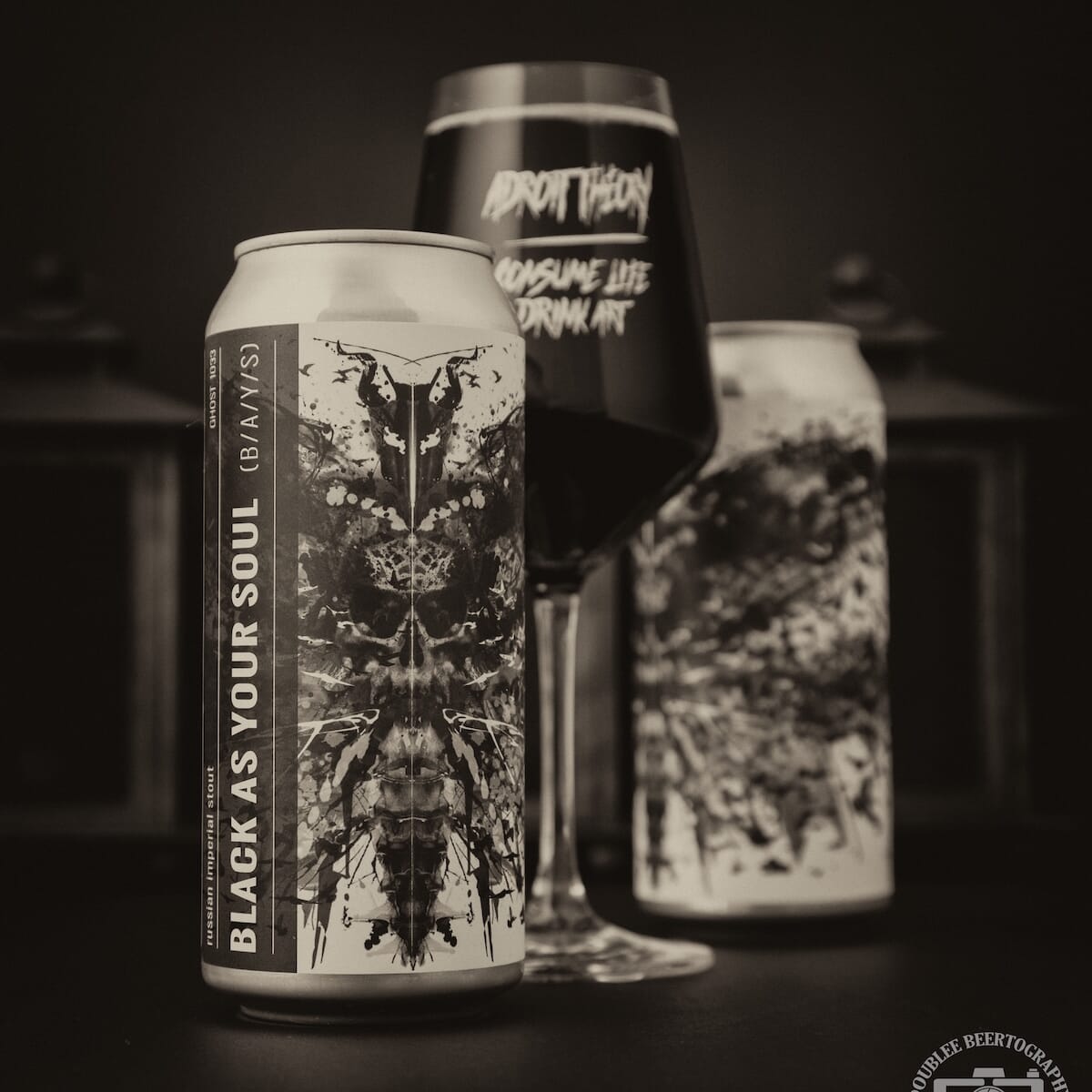
The can carries the Ghost number 1039, part of the sequential system Adroit Theory assigns to its releases, with the artwork run as a mirrored ink-splatter skull in black and white.
Black as Your Soul is available now in Purcellville, on draft and in cans, with five cases packaged.
Source & Editorial
JollyPint independently prepares release articles using information published by breweries through newsletters, websites, and other official public communications. Brewery-supplied descriptions and tasting notes are reported as provided, while editorial context is added by JollyPint.