
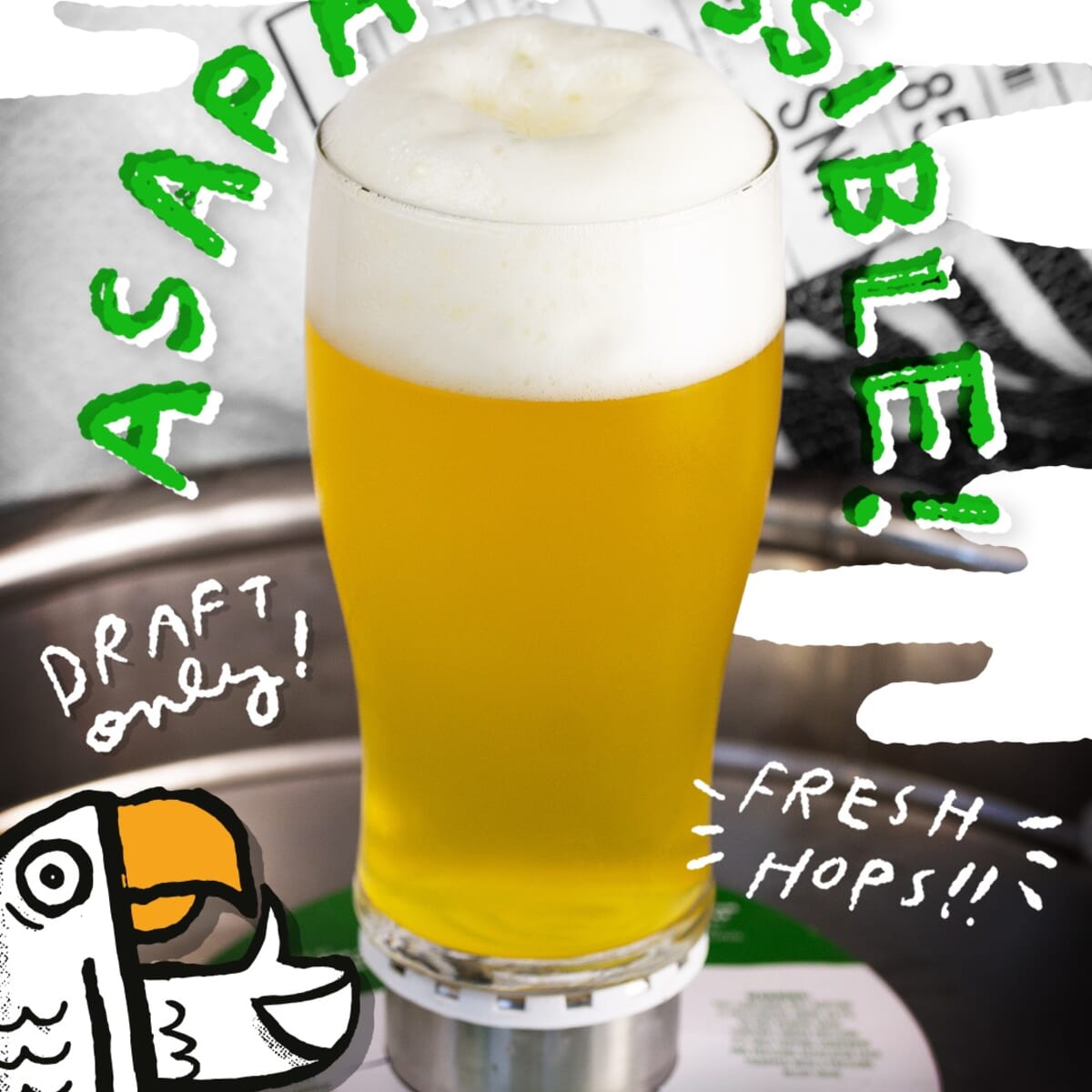
The timeline is the beer. Green Cheek Beer Company says fresh Strata cones were picked at Coleman Agriculture in Oregon at 4am, put on a plane at 8am, collected at John Wayne Airport at 11am, and were in wort by 3:41pm the same afternoon.
That window is the entire reason fresh hop beer exists as a category. Hops are normally dried and pelletized within hours of the pick, because undried cones carry a great deal of water and begin to degrade almost immediately. Brewing with them wet means accepting a hard deadline measured in hours, and getting in return a green, juicy aromatic character that does not survive the kiln. Most breweries manage it by being close to a hop farm. Green Cheek is in Orange County, roughly a thousand miles south of the Willamette Valley, so it chartered a seat on a commercial flight instead.
The volume is the second unusual number. The brewery says it used 15 pounds per barrel on the hot side. Undried cones are mostly water, so fresh hop rates run far above what a dry-hop figure would suggest, but this is a large charge by any measure.
After fermentation the beer was hopped again, this time with three processed forms of the same variety:
- Strata T90
- Strata Cryo
- Strata Hyperboost
Strata is a good candidate for that treatment. Released by Oregon State University's breeding program and grown commercially in the Willamette Valley, it is known for a passionfruit and berry profile with a resinous edge, which is unusual company for the citrus and pine that define most West Coast hops.
The brewery's tasting notes track with that. Green Cheek describes an intense lychee candy and peach tea profile, with pineapple, orange marmalade and raspberry coming through behind it.
ASAP As Possible returns once a year, and the brewery is clear about why the window is narrow. This year's batch is draft only, pouring at Green Cheek's taprooms in Orange, Costa Mesa, Sunset Beach and Oceanside.
Source & Editorial
JollyPint independently prepares release articles using information published by breweries through newsletters, websites, and other official public communications. Brewery-supplied descriptions and tasting notes are reported as provided, while editorial context is added by JollyPint.