
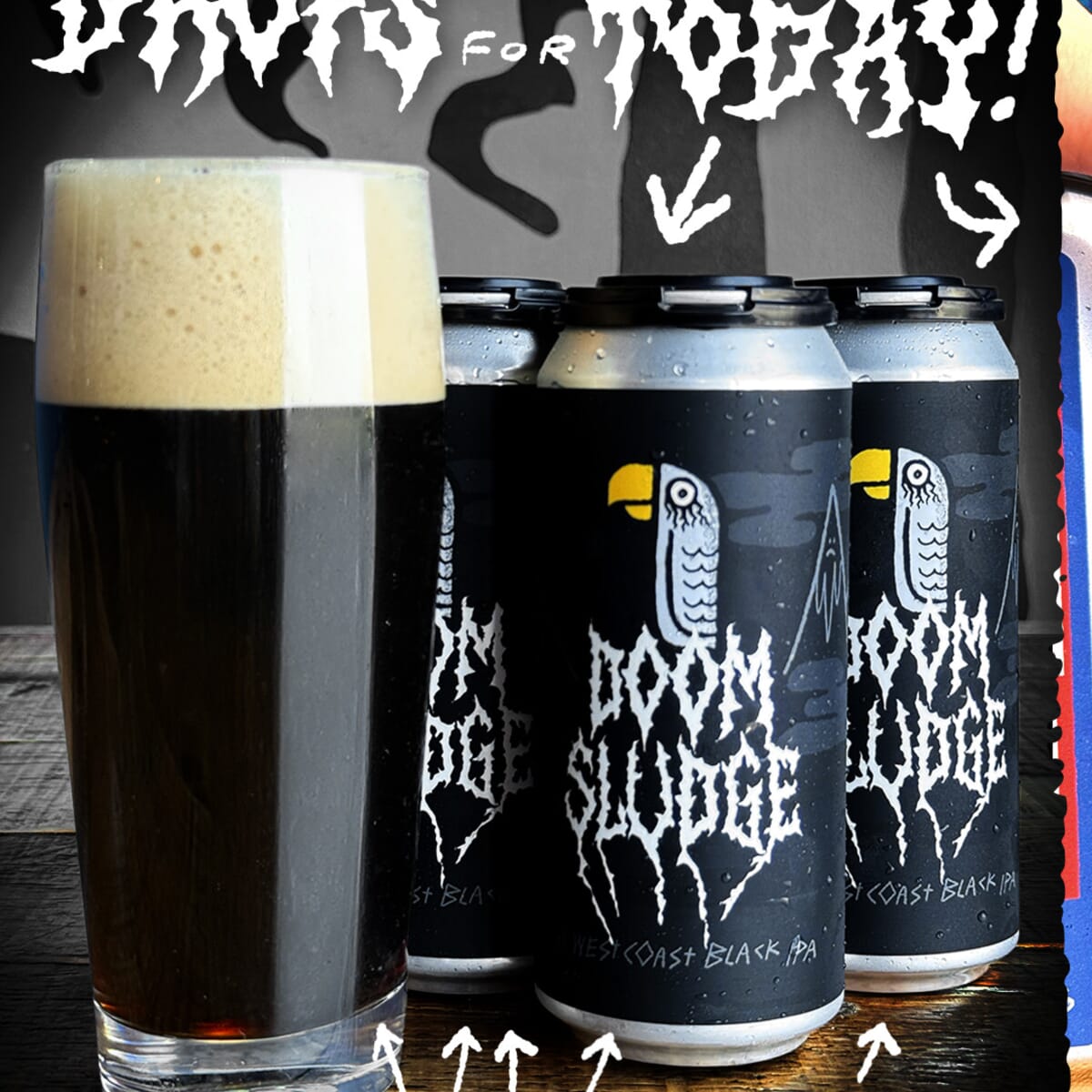
Black IPA had a few good years in the early 2010s and then more or less left the cooler. Green Cheek Beer Company has put one back in it at 7.0 percent, under the name Doom Sludge.
The style's difficulty was always arithmetic. A black IPA asks for the color and roast of a dark beer alongside the bitterness and aroma of a hoppy one. Those two bitternesses do not simply add up. They compete, and the failure mode is a beer that tastes like burnt grapefruit. The usual fix is dehusked or debittered dark malt, which supplies color without dragging the harsher roast character along behind it. Getting that balance right is most of the reason the style is hard to do well.
Green Cheek's beer list credits Mosaic Cryo, Ekuanot and Columbus Cryo. The cryo part matters more than it looks. Cryo hops are made by separating lupulin - the resin and oil that carry hop flavor - from the leafy material of the pellet at very low temperature. The result is more aroma per gram and less vegetal pull. That is a useful trade in a beer that already has a large quantity of dark malt asking for attention.
The brewery's own description is written as doom metal:
BLACK. Deep as the abyss, immeasurably smooth. A mountain of Mosaic loomed vast, crowned with a gate of clean, unerring bitterness.
That is a mood rather than a tasting note. It does commit to two things, though, smooth and cleanly bitter, and those are the right things to promise from this style.
Doom Sludge dropped Wednesday at Green Cheek's taprooms. Four-packs are 16 dollars.
Source & Editorial
JollyPint independently prepares release articles using information published by breweries through newsletters, websites, and other official public communications. Brewery-supplied descriptions and tasting notes are reported as provided, while editorial context is added by JollyPint.