
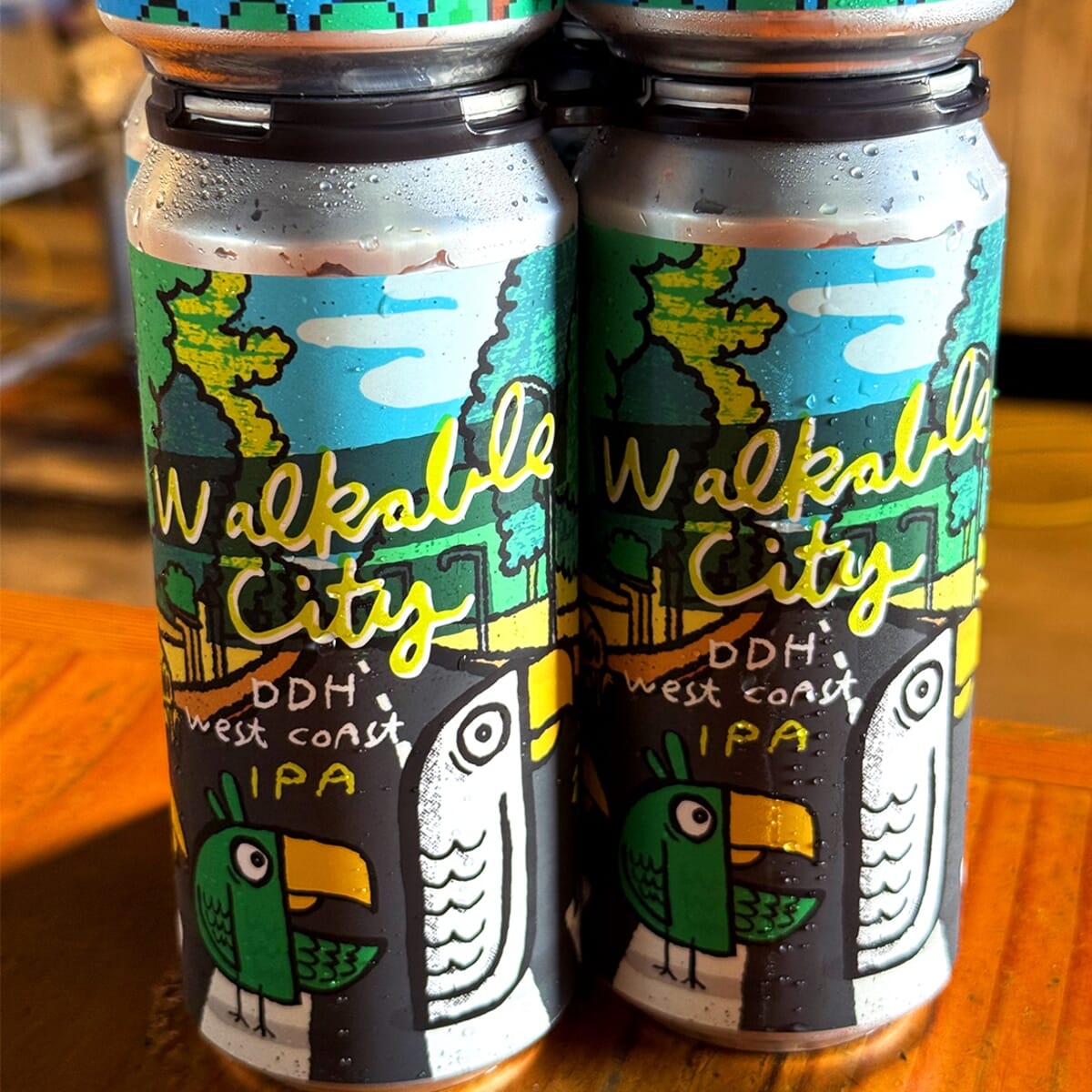
Five hop additions go into Walkable City. Four of them are cryo.
- Mosaic
- Mosaic Cryo
- Nelson Cryo
- Krush Cryo
- Simcoe Cryo
Cryo hops are lupulin - the sticky resin carrying hop oil - separated from the leafy material of the pellet at very low temperature and concentrated. Most beers use a measure of it to sharpen a dry hop. Building nearly the whole bill out of it is a different order of decision.
It suits what Green Cheek says it was chasing. The brewery describes a modern West Coast IPA: wonderfully pale in color, New School in hop character, with a firm and snappy bitterness. Those three things work against each other when you pursue them with ordinary pellets. Heavy pellet dry-hopping drags in plant material that nudges the color up, rounds off the bitterness and adds a grassy pull. Taking that material out beforehand is how a beer carries this much aroma and still lands pale and sharp.
The tasting notes commit. Green Cheek describes fresh nugs of the Devil's Lettuce jumping out of the glass, with no garlic or onion behind them, running into heavy zesty citrus and something Cactus Cooler-like.
The garlic-and-onion caveat is a real one rather than a joke. Pushing certain hops hard can throw sulfur compounds that land nearer to alliums than to fruit, and it is a known hazard at exactly the aroma levels this beer is aiming for. Putting the disclaimer in the release notes is a way of saying they went looking for it.
Cactus Cooler is the local shorthand. The orange-pineapple soda has always been strongest in Southern California, which makes it a reference an Orange County brewery can drop without explaining. It also names the combination well: orange citrus with a tropical sweetness sitting behind it.
The name gets its own small wish, and the can art runs with it. Behind the brewery's parrot is a street scene with trees, rooflines and a crosswalk. Green Cheek signed off the announcement by asking who is ready for a walkable city.
Walkable City is available now at Green Cheek's taprooms.
Source & Editorial
JollyPint independently prepares release articles using information published by breweries through newsletters, websites, and other official public communications. Brewery-supplied descriptions and tasting notes are reported as provided, while editorial context is added by JollyPint.