
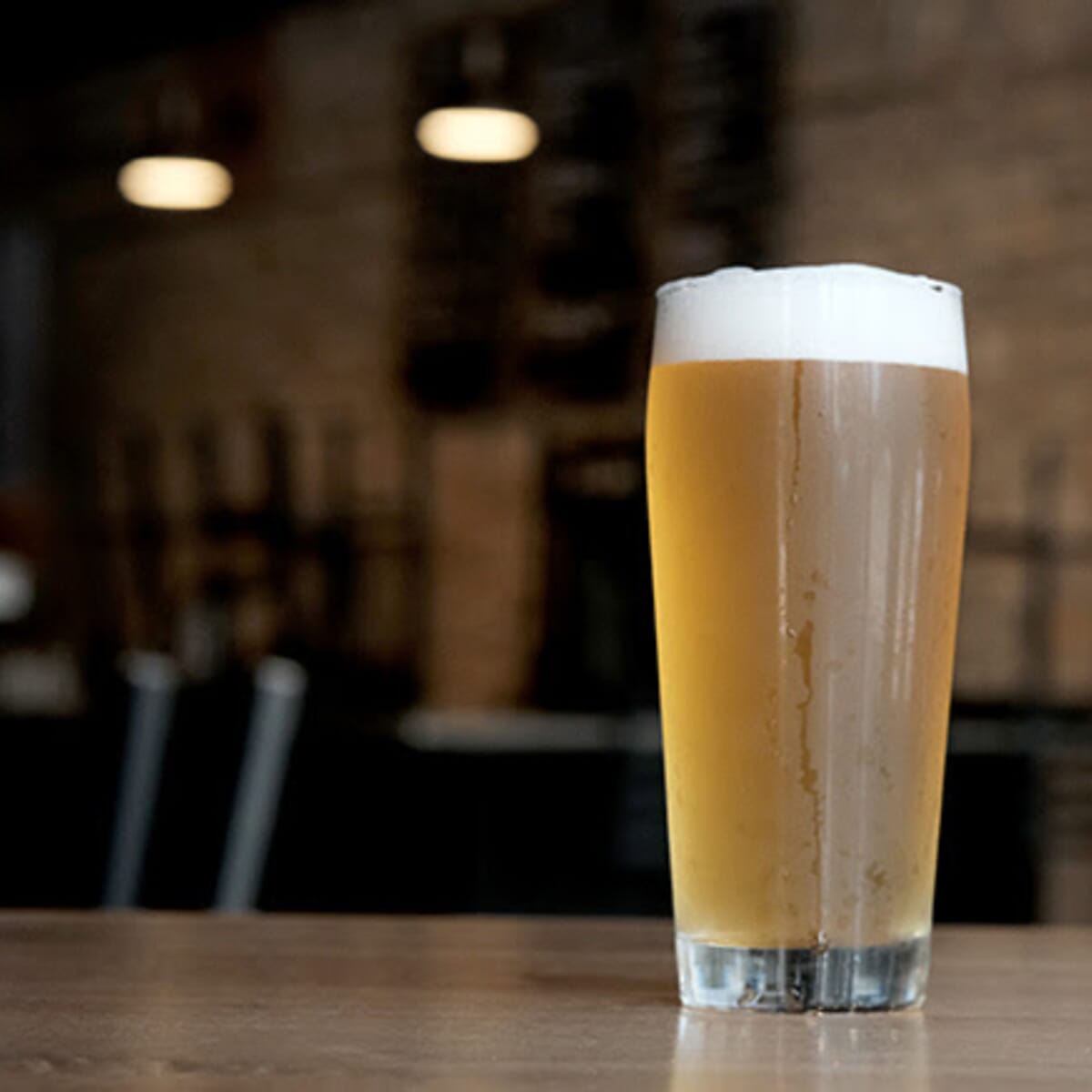
A beer coming back is usually a quieter piece of news than a beer arriving. It also tends to mean the brewery has already settled the argument about whether it was worth making.
Fat Hill Brewing returned Keller Pils to its taps on Monday, September 15. The Mason City brewery lists it at 5 percent and 30 IBU, and describes it as a golden-hued stunner and a staff favourite.
The recipe is built on three ingredients the brewery names specifically. German Saaz hops supply what Fat Hill describes as a floral, slightly spicy note. Floor-malted Bohemian Pilsner malt supplies the counterweight, which the brewery calls a bready wallop. A classic German lager yeast is credited with blending the two.
Floor malting is worth explaining to anyone who has not run into the term. It is the traditional method, where germinating barley is spread across a large floor and turned by hand rather than agitated mechanically in a modern vessel. It is slower and costlier than the industrial alternative, and it remains in use largely because maltsters and brewers argue it yields a rounder, more complex malt character. In a beer this pared back, there is nowhere for that character to hide.
The style name points the same direction. Keller means cellar, and a Keller Pils is traditionally a young, unfiltered pilsner served more or less straight from the tank without the polish of a long conditioning and filtration regime. That is a style that rewards good raw material and punishes shortcuts, which is a reasonable thing to say about a beer whose ingredient list is this short.
Keller Pils is pouring now at Fat Hill Brewing in Mason City.
Source & Editorial
JollyPint independently prepares release articles using information published by breweries through newsletters, websites, and other official public communications. Brewery-supplied descriptions and tasting notes are reported as provided, while editorial context is added by JollyPint.