
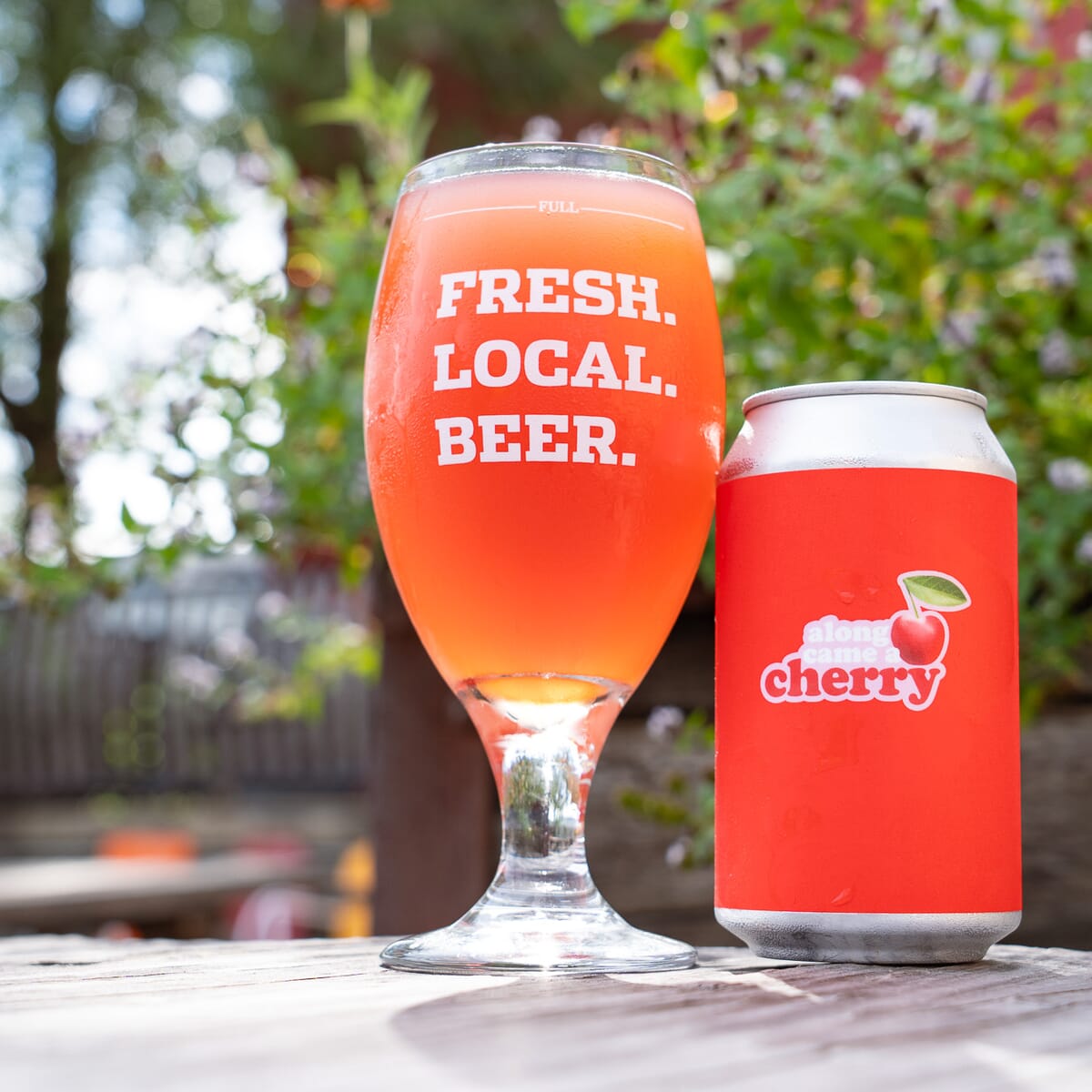
The interesting decision here is one East End made and then explained.
Along Came a Cherry Cider is back on the tap lines in Larimer and Mt. Lebanon after a hiatus, with cans available alongside. It is the fruited version of the cidery's base Along Came a Cider, built with cherries and currants and landing at 8 percent.
The base cider is already 6.5 percent. That put East End within reach of a label it declined to use.
Our base cider is already pretty strong at 6.5% and this version landed at 8%, so we decided to do away with the "imperial" tag as we don't think the increase in alcoholic content is quite enough for that.
The brewery goes on to note, accurately, that imperial generally denotes a big beer but gets used interchangeably with double and strong. It is a term with no fixed threshold and no authority enforcing it, which is exactly what makes declining to use it a choice rather than a rule.
What the fruit does is more concrete. East End describes more tartness and more sweetness than the base cider, both arriving with the cherries and currants. Currants are the less obvious of the pair. They carry a sharp acidity and a darker, slightly resinous fruit character, which gives a cherry cider somewhere to go beyond straightforward sweetness.
The brewery adds that the fruit hides the alcohol well, which at 8 percent is worth knowing before the second glass. That combination of tart fruit and buried strength would sit well next to something rich and salty - a sharp aged cheddar, or a plate of cured meat.
Like the base cider, this one is gluten free. It is pouring now in both Larimer and Mt. Lebanon.
Source & Editorial
JollyPint independently prepares release articles using information published by breweries through newsletters, websites, and other official public communications. Brewery-supplied descriptions and tasting notes are reported as provided, while editorial context is added by JollyPint.