
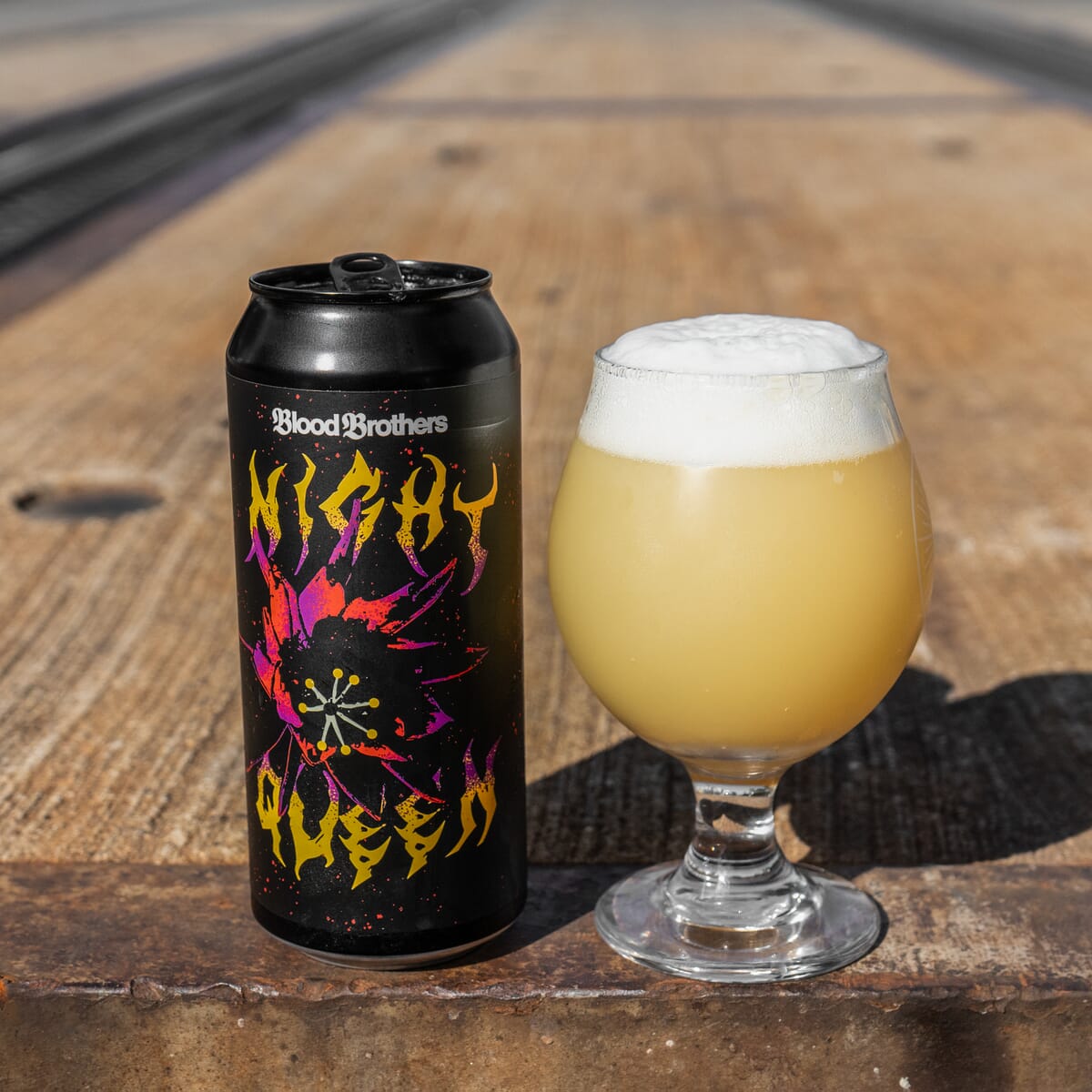
Most hop bills name the variety. Blood Brothers Brewing's newest hazy IPA names the farm as well.
Night Queen is a 6.2 percent Hazy IPA hopped with Motueka, Riwaka and Rakau, and the Toronto brewery credits all three to Freestyle Hops. Freestyle is an independent grower in New Zealand's Nelson region. What it trades on is lot selection: brewers come to the farm and pick specific lots, rather than ordering a variety by name and taking whatever arrives in the bale.
That practice matters most for the third hop on the list. Rakau is the stone fruit variety of the three, and Freestyle picks its Rakau later than convention suggests. The stated reasoning is that hanging longer deepens the ripe apricot character and keeps the grassy edge out of it. Blood Brothers lists ripe stone fruit among the aromas here, which on a Rakau from this particular farm is a note somebody decided on months before the beer was brewed.
The other two are Nelson-region mainstays. Motueka is the lime hop, descended from Saaz and carrying a clean lemon-lime citrus. Riwaka is the scarce one, low-yielding and difficult to secure in volume, and prized for an intense passionfruit aroma.
The brewery describes fresh lime, passionfruit, ripe stone fruit and subtle resin, held up by a soft malt backbone and finishing crisp.
The can is black, with a spiked bloom in magenta, orange and yellow opening around a pale starburst, and the name set in jagged letters above and below it.
Night Queen is in 473 mL tall cans now, available at the Geary Avenue bottle shop in Toronto and through the brewery's online store. It lands the same week as Ginger Typhoon, a returning 5 percent ginger beer.
Source & Editorial
JollyPint independently prepares release articles using information published by breweries through newsletters, websites, and other official public communications. Brewery-supplied descriptions and tasting notes are reported as provided, while editorial context is added by JollyPint.