
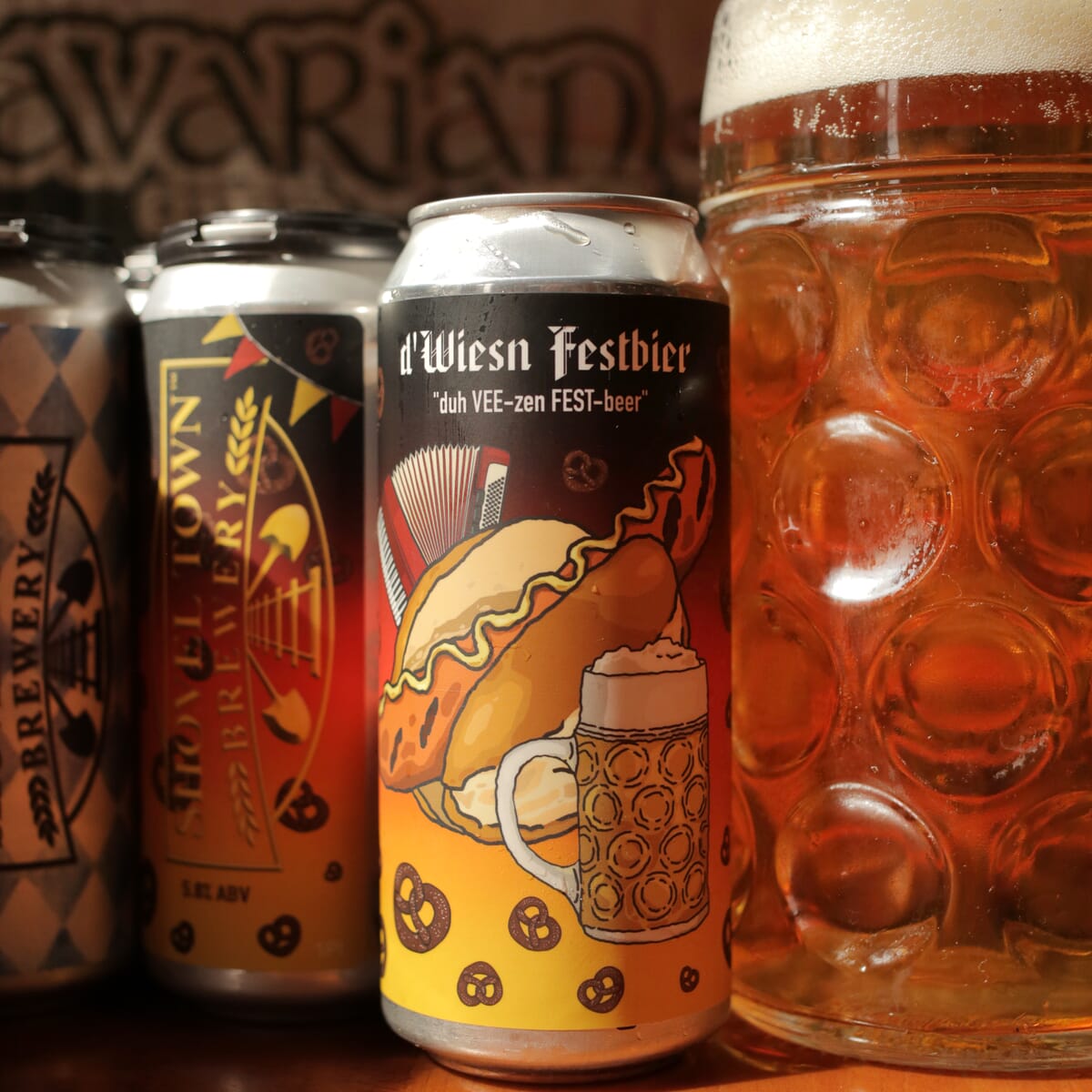
Shovel Town Brewery has printed a pronunciation guide on the can. Directly beneath the name d'Wiesn Festbier, set in quotation marks, it reads "duh VEE-zen FEST-beer."
The name is more specific than it first appears. Munich locals do not generally say they are going to Oktoberfest. They say they are going to the Wiesn, after the Theresienwiese, the open ground on the edge of the city where the festival has been held since 1810. So this beer is named for the field rather than the party. The can art follows the same logic, illustrating an accordion, a bratwurst in a bun under a stripe of mustard, a stein and a scatter of pretzels. Everything on the label is something you would find on the fairground, not in the glass.
Shovel Town places the style between its two better known neighbors. The brewery's line is that festbier lives somewhere between the deep amber of Marzen and the gold of a Helles lager, and calls it a lager of purpose, designed to be crisp, flavorful and refreshing.
The specifics the brewery gives are light copper color and brilliant clarity, with aromas and flavors of lightly toasted bread crusts, clean crackery pilsner malt and a hint of floral noble hop character. It is 5.8 percent, which puts it squarely in the range the Munich tents pour. That is the quiet trick of the style. Festbier is built to be ordered by the liter at a strength most drinkers would guess is lower.
The beer arrives as part of a broader seasonal changeover at the taproom. Shovel Town used the same newsletter to announce the return of its pumpkin spiced ale, and to flag its own fest in Easton, with tickets available at the door.
d'Wiesn Festbier is available now on draft and in cans to go.
Source & Editorial
JollyPint independently prepares release articles using information published by breweries through newsletters, websites, and other official public communications. Brewery-supplied descriptions and tasting notes are reported as provided, while editorial context is added by JollyPint.