
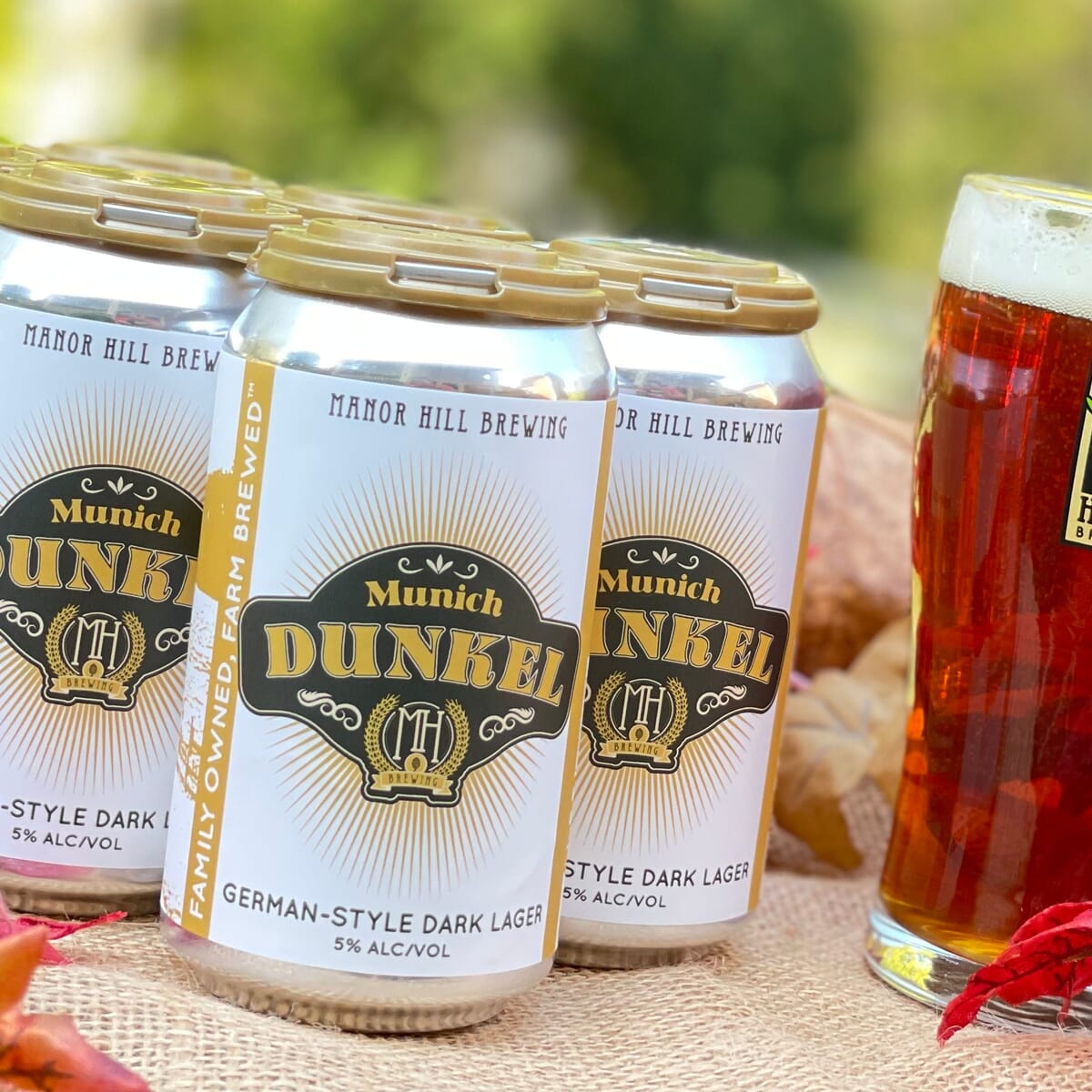
Most beers are assembled from a stack of malts, each brought in to do one job. Munich Dunkel is the exception, and Manor Hill Brewing has stayed close to the traditional build. The grist is nearly 100 percent German dark Munich malt, with what the brewery calls a dash of chocolate malt over the top.
That is possible because of what Munich malt actually is. It is kilned warm enough to develop deep color and a bready, toasted character, but not so hot that it loses the enzymes needed to turn starch into sugar. Most specialty malts have to ride along with a pale base malt doing that conversion for them. Munich malt can carry an entire mash on its own. A brewer who wants color and toast without roast bitterness can simply use more of it, and that is the whole architecture of a Dunkel.
By Manor Hill's account, the result is a deep amber lager with aromas of toasted breads and roasted plums, layered with subtle notes of chocolate and toffee. Traditional German hops supply what the brewery describes as just enough bitterness for balance, leaving the malt to lead and the finish barely dry and crisp. It is 5 percent ABV.
Dunkel is German for dark, but the style has never meant black. Deep amber through chestnut is where it belongs, and the glass in the brewery's own release photograph reads exactly that: clear, red-brown, and a long way from a stout. The beer is worth a look next to something roastier for that reason alone. The color says most of what separates the two.
Munich Dunkel closes out Manor Hill's European Series. It arrives Friday, September 4 at 4pm at the farm in Ellicott City, in cans and on draught, and the release carries through the Labor Day weekend. Saturday and Sunday pours begin at noon. Monday the farm keeps special holiday hours from noon to 5. Live music runs on three of the four days, with Chris Montcalmo on Friday evening, Almost Infinity on Sunday afternoon and The Low Keys on Monday. The Pizza Trolley is on site throughout.
Source & Editorial
JollyPint independently prepares release articles using information published by breweries through newsletters, websites, and other official public communications. Brewery-supplied descriptions and tasting notes are reported as provided, while editorial context is added by JollyPint.