
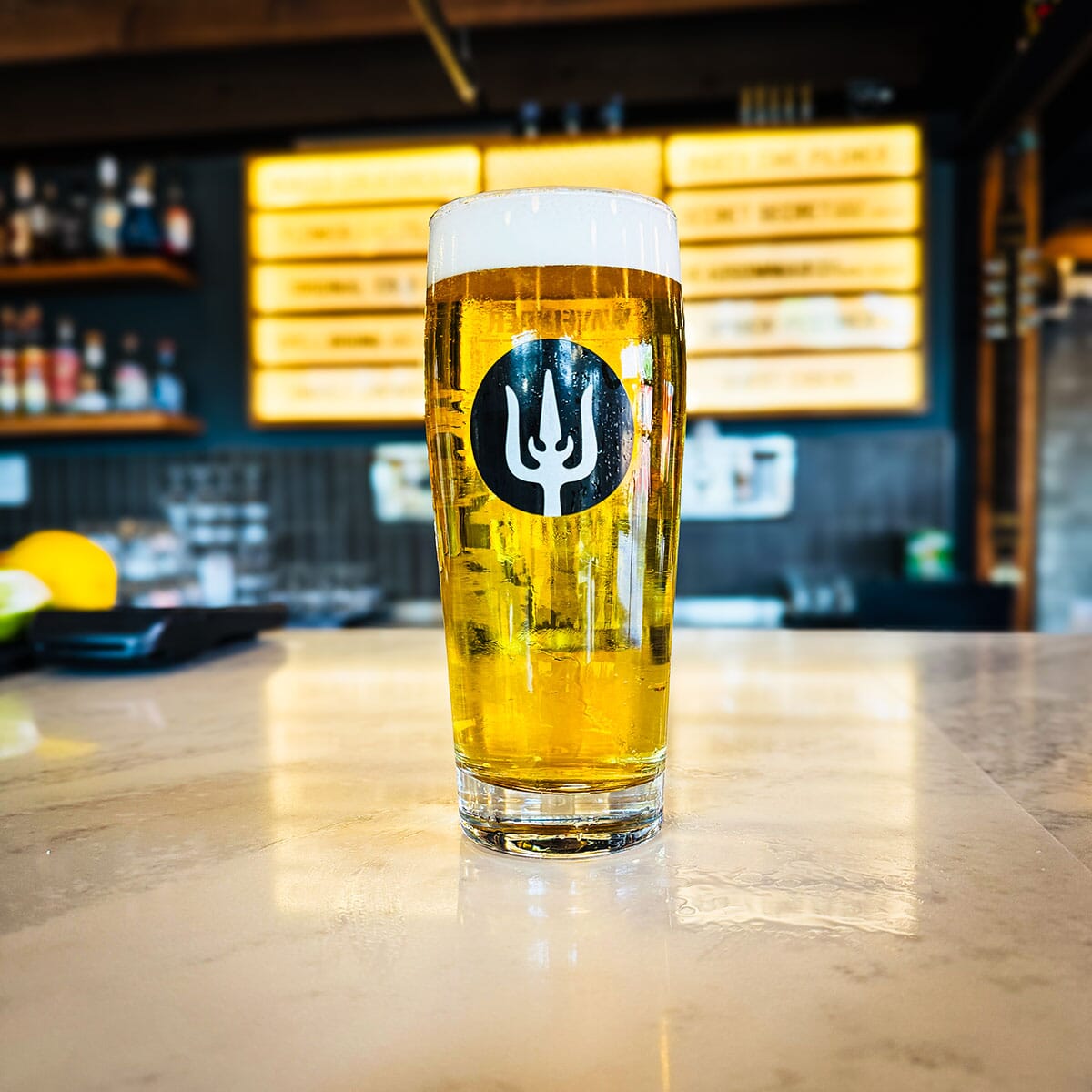
Jaws of Damnation is a fixture at Wayfinder Beer. The rice lager pours year-round at 5.3% ABV. It also appears twice more on the pub menu in other forms: as the base of the house michelada, and under a float of frozen lemonade in a drink called Hell Freezes Over. It is the beer the room drinks.
For the next few weeks it also exists in a fresh hop edition, out now, fresh-hopped with Luminosa.
That is an unusual destination for a hop harvest. Fresh hop beers overwhelmingly go into IPAs and pale ales, styles already built to absorb a great deal of hop material without losing their shape. A rice lager is the opposite kind of beer. Rice is used to lighten the body and dry out the finish, and the whole design brief is to stay out of the way. Loading one with undried hops is a deliberate mismatch, and the reward for it is that nothing in the beer is capable of obscuring the hop.
Wayfinder describes the result as a vibrant, clean tropical fruit character with an almost total absence of heavy pine or resin. The brewery also reports delicate rice sweetness meeting freshly picked hop flavor, and a finish it calls bright, tropical and snappy.
The absence claim is the one worth noting. Green, sticky, resinous character is what most drinkers associate with fresh hops, and it is frequently the dominant impression a fresh hop beer leaves. A fresh hop beer described specifically as lacking it is pointing at the variety rather than the technique - the brewery is crediting Luminosa for producing clean tropical fruit where the format usually delivers pine.
Fresh hop beers have a short life by definition, and this one is pouring now at Wayfinder's Portland pub and its Troutdale taproom.
Source & Editorial
JollyPint independently prepares release articles using information published by breweries through newsletters, websites, and other official public communications. Brewery-supplied descriptions and tasting notes are reported as provided, while editorial context is added by JollyPint.