
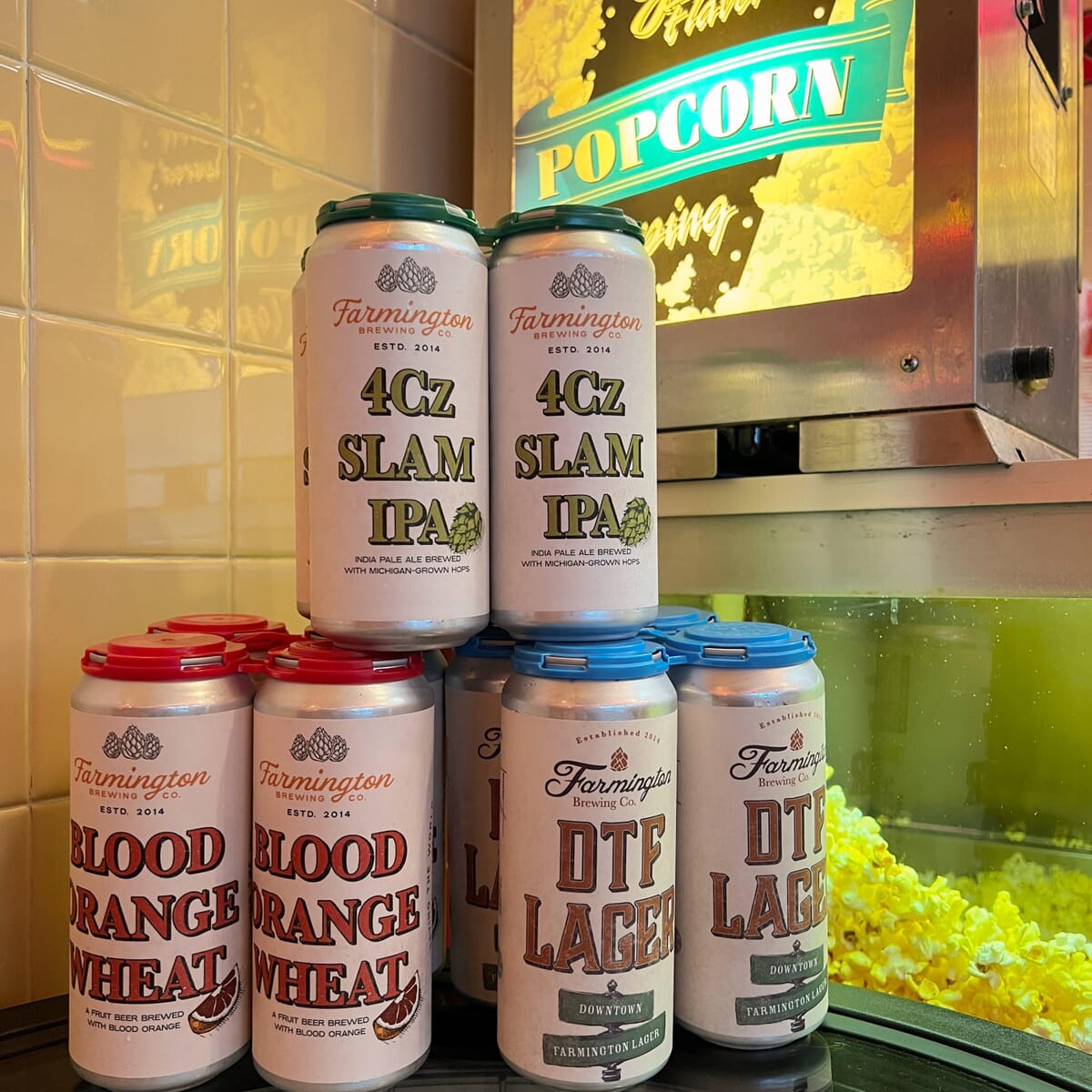
A beer named after four blocks of downtown has earned its way into a can.
Farmington Brewing Company says its DTF Lager, short for the DownTown Farmington Lager, is now available in cans at the taproom and at local beer and wine shops. The brewery attributes the move to what it calls overwhelming demand for a beer it describes as a local favorite. DTF is a Mexican-style lager at 5.0 percent ABV and 23 IBU.
The recipe is straightforward and specific. Pilsen and Munich malts form the base, Saaz provides the hopping, and flaked corn rounds out the grist. Farmington describes the result as light-bodied with soft malt complexity and a crisp finish.
Each of those choices tracks the style closely. Flaked corn is the traditional adjunct in a Mexican lager, lightening body and adding a faint sweetness without the malt weight that additional barley would bring. Saaz is a noble Czech hop with gentle, spicy bitterness, and it sits comfortably in a tradition that owes much of its origin to Central European brewers who brought their lager practice to Mexico. Munich malt is the detail that fills things out, contributing a light bready depth that keeps a corn-adjunct lager from reading as thin.
At 23 IBU the hopping is present rather than prominent, which is the balance the style asks for.
Cans join a lineup that already reaches beyond the brewery's own bar. Farmington notes that the Farmington Civic Theater next door recently added a bar to its concessions and is now serving the brewery's canned beers.
DTF Lager is on tap and in cans at the Grand River Avenue taproom, and on shelves at local beer and wine shops.
Source & Editorial
JollyPint independently prepares release articles using information published by breweries through newsletters, websites, and other official public communications. Brewery-supplied descriptions and tasting notes are reported as provided, while editorial context is added by JollyPint.