
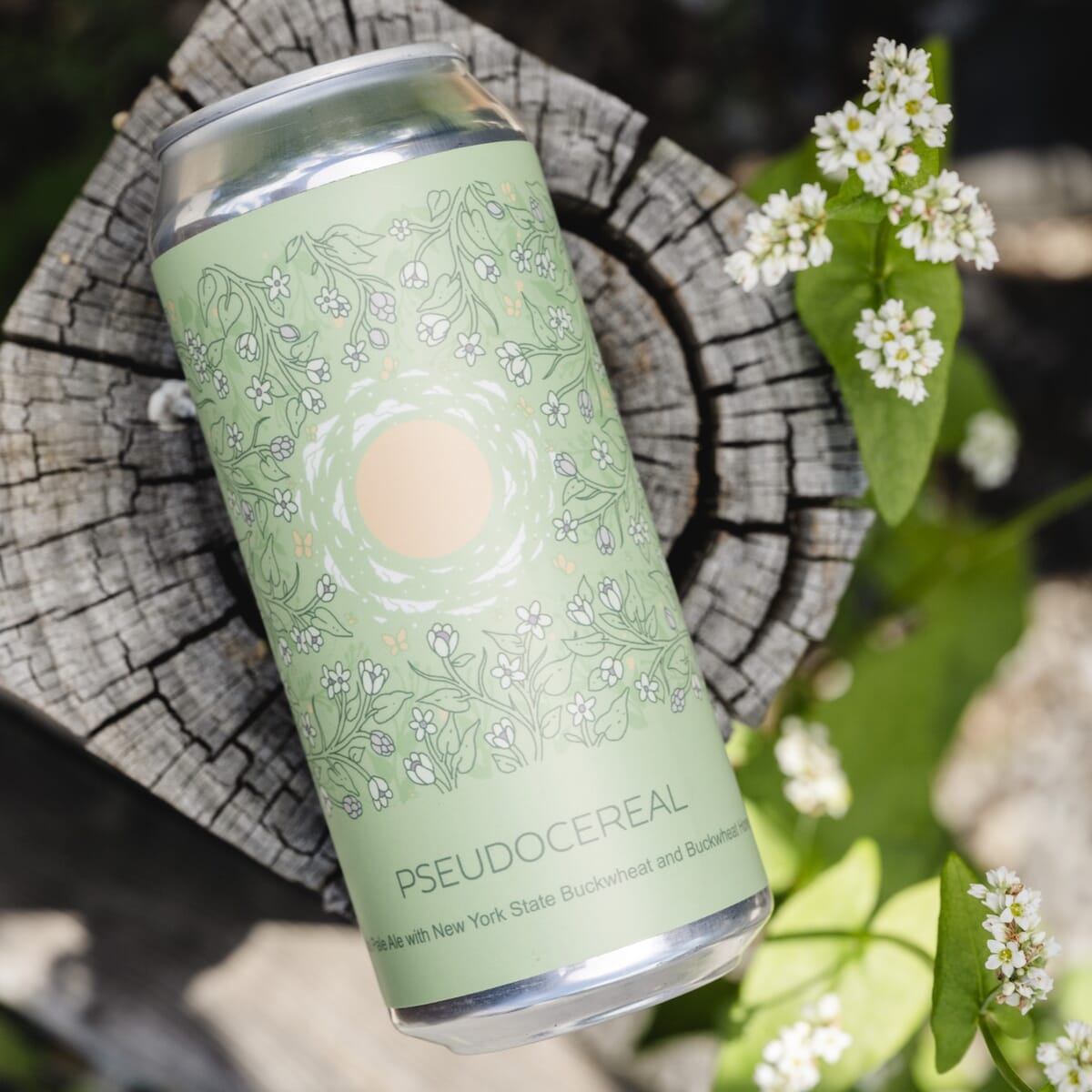
Buckwheat is not a cereal. It is not a grass, and despite the name it is not related to wheat. Botanically it keeps company with rhubarb and sorrel, and the part farmers harvest is a seed that simply behaves like a grain once it is milled. The formal word for a plant in that position is pseudocereal, and Hudson Valley Brewery has now put it on a can.
Pseudocereal is a Little IPA at 4 percent, brewed in collaboration with the Glynwood Center for Regional Food and Farming. Every ingredient in it was grown in New York State. The buckwheat comes from Gianforte Farm. Barley and raw wheat come from Hudson Valley Malt. The hops are Cascade, grown at Skaneateles Hop Farm.
That last detail carries more history than it first appears to. New York led the country in hop production for much of the nineteenth century. Downy mildew and then Prohibition dismantled the industry almost completely, and growing moved west to the Pacific Northwest, where it has stayed ever since. The New York hop farms now selling Cascade by the pound are a recent rebuild, encouraged in part by a state farm brewery license introduced in 2012 that ties its benefits to the use of New York-grown ingredients.
The buckwheat is not an arbitrary pick either. Glynwood's Grains and Staples program supports regenerative grain farming, and buckwheat is one of the standard instruments of that practice. It grows fast, smothers weeds, flowers heavily enough to be a serious pollinator crop, and returns organic matter to the soil between cash crops. The difficulty with cover crops has always been that they build soil without earning anything. Brewing with one is a direct answer to that.
It is worth noting what the buckwheat is not doing here. The grain is most often reached for in brewing because it contains no gluten, which makes it a fixture of gluten-free beer. Sitting alongside barley and raw wheat, that is plainly not the assignment. It is in this beer for the earthy, faintly nutty character the seed is known for, and because it grows well in the Hudson Valley.
Four percent is a modest number for anything wearing the letters IPA, and for a beer built to show its grain bill, it is a practical one. There is not much alcohol in the way.
The can follows the same thread. Pale green, wrapped in a line drawing of buckwheat in flower, down to the small white blossoms the plant throws out before it sets seed.
The brewery frames the release as a celebration of Glynwood's work over more than 25 years building regional food systems in the Hudson Valley. Pseudocereal is pouring in the Beacon tasting room and will turn up at Glynwood's fundraising events on its Cold Spring farm. Four-packs of 16 ounce cans are listed in the brewery's shop at $17, filed under a category Hudson Valley keeps standing year-round: 100% New York State.
Source & Editorial
JollyPint independently prepares release articles using information published by breweries through newsletters, websites, and other official public communications. Brewery-supplied descriptions and tasting notes are reported as provided, while editorial context is added by JollyPint.