
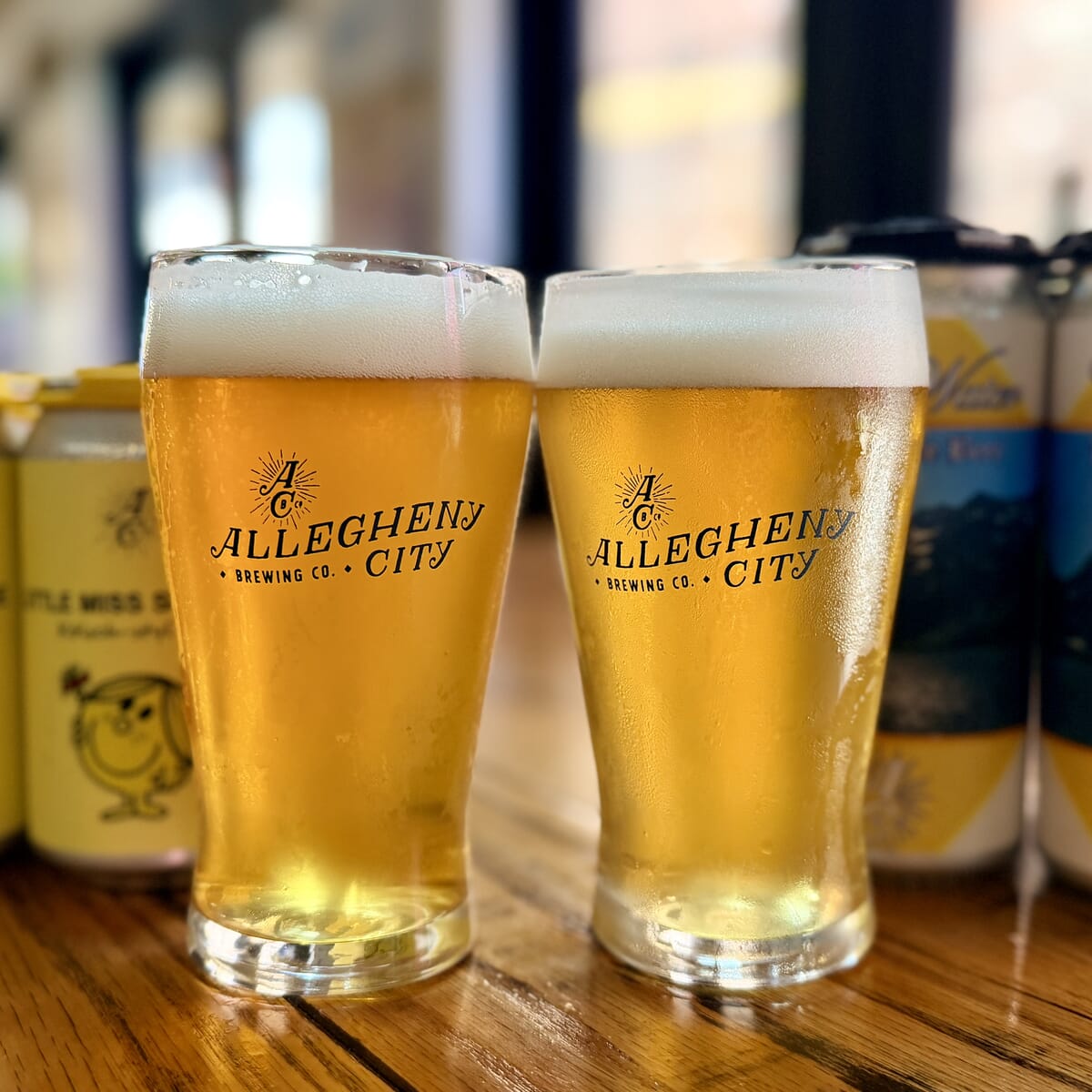
Allegheny City Brewing is about to have two Kolsches on at once, which is what prompted the question in its newsletter subject line. The brewery's original Kolsch recipe, Cool Water, returns Wednesday. Little Miss Sunshine, the Kolsch that has been holding the slot, is not going anywhere.
They are not two takes on one recipe. According to the brewery, the pair differ in grain, water profile, hops, yeast and lagering time. That is effectively every lever a brewer has. The invitation in the newsletter is to try both and decide which one you prefer.
Kolsch is a good style to run that experiment in, because there is so little in it to hide behind. It is a hybrid by design, fermented warm with ale yeast and then cold conditioned like a lager, and it lands somewhere pale, soft and dry. A beer built like that leaves water chemistry audible in a way a heavier one does not. Changing the water profile between two otherwise similar pale ales is a real fork in the road, not a footnote.
The name on the can carries a small piece of history with it. Cool Water is labeled a Kolsch-Style Ale rather than a Kolsch, because the word itself is protected. A 1986 agreement among Cologne's brewers, backed since by European geographical-indication rules, reserves the name for beer brewed in and around that city. Brewers everywhere else append "style" and get on with it.
Cool Water Kolsch is 5.1 percent ABV. It arrives Wednesday, September 2 on draft and in cans at the Deutschtown taproom on East Ohio Street. The Brighton Heights location on California Avenue gets cans the same day, with draft following once Little Miss Sunshine has finished its run. Brighton Heights is also pouring half-price Little Miss Sunshine drafts on Thursday, so the comparison stays available for at least a little while.
Source & Editorial
JollyPint independently prepares release articles using information published by breweries through newsletters, websites, and other official public communications. Brewery-supplied descriptions and tasting notes are reported as provided, while editorial context is added by JollyPint.